

Recruitment is not always the best response to a capability gap, especially when a critical role has a direct impact on operations. A well-designed LMS-based reskilling approach can offer a much stronger advantage, provided it is tied to role requirements, a clear path to readiness, and hard data. It shows how to organise Learning in a way that shortens time to productivity, reduces compliance risk, and gives the business better visibility into readiness across locations. For CHROs, above all, it offers a practical way to translate development into the language of business and build a more predictable model for safeguarding critical roles.
When a critical vacancy appears, the organisation typically slips into its standard hiring mode. In practice, that increasingly feels like roulette: the market is tight, time is ticking, salaries are rising, and the quality of candidates is still a big unknown. At the same time, the cost of a bad hire is rising faster than HR budgets, which means a single poor decision can wipe out more value than an entire quarter’s worth of HR improvement initiatives. This is especially true in companies where a “critical role” translates directly into business risk: downtime, complaints, accidents, missed targets, or audit issues - all the things that materialise without asking for permission and without patiently waiting for the labour market to graciously deliver the perfect person.
If you want to calculate what that “empty desk” moment is really costing you before anyone is even able to perform, see also: “The cost of an empty desk: How much you lose on manual CV screening and how to stop it.”
A shortage of people forces you into a bidding war in a tough market, while a lack of readiness shifts the focus inward: you realise that capabilities can be built instead of bought. Very often, that happens faster, more cheaply, and in a far more predictable way - provided it is not treated as one-off training, but as a precise, data-driven process with:
- a clear definition of readiness for a specific role,
- a transparent path to readiness, along with rules for maintaining standards (licences, certifications),
- a business-side owner who feels accountable for the outcome,
- data that shows, without guesswork, where readiness is improving and where it is about to turn into real cost.
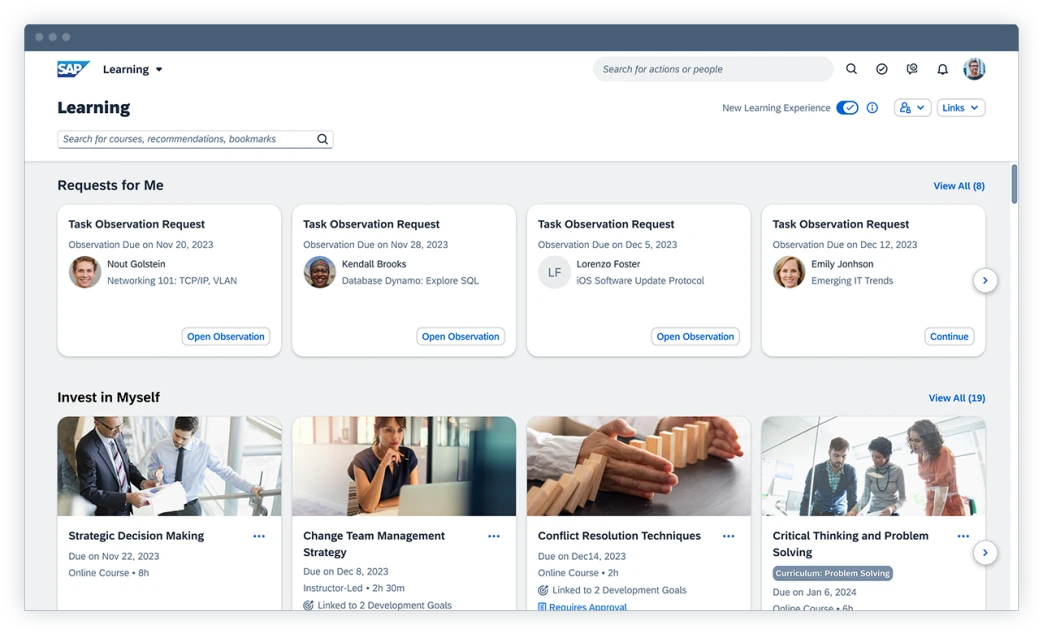
Why Learning is now on the CHRO’s desk
If you work in a distributed organisation - manufacturing, logistics, service networks, retail, shared services - you know the pattern:
- one location runs onboarding its own way,
- another still tracks training “in a notebook,”
- a third relies on “that great manager who just remembers everything.”
On paper, it is one company. In practice, it operates like several different worlds. The problem starts when pressure shows up: performance, quality, audit, safety, transformation.
And this always comes back to the same thing: goals and metrics. If you want to see how to structure that strategically rather than descriptively, read: “How Goals Safeguard the Execution of Business Strategy.”
That is why Learning stops being a “soft HR topic” and becomes a question of the company’s ability to operate:
- Can this person perform this job today, and can we prove it?
- How long will it take to bring someone to readiness?
- Where is risk building up before it turns into a real problem?
These are the questions CHROs are hearing more and more often from COOs, CFOs and CEOs. At that point, hiring stops being the only answer, because it does not solve the readiness problem - it simply swaps in a new person who still has to be brought up to full effectiveness.
Too many companies treat an LMS like a course rental library: catalogue, enrolment, training, certificate. That may work as a benefit, but it is simply too weak as a way of safeguarding critical roles.
If you want Learning to genuinely deliver, you have to flip the logic:
Not: “What training do we have?”
But: “What level of readiness does a person in this role need to have?”
SAP SuccessFactors Learning makes it possible to structure that readiness in a way that can be actively managed and controlled.
1. You build role-based pathways, not “development for everyone.”
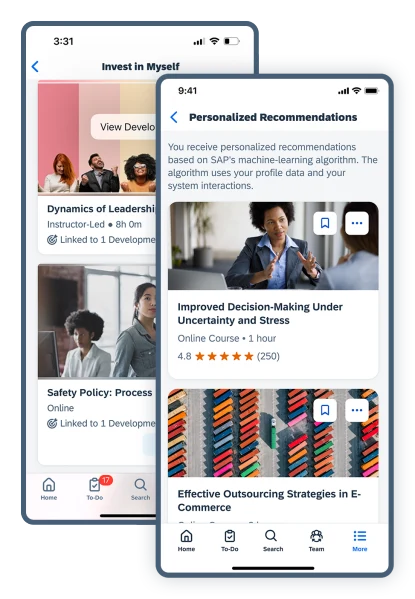
Critical roles require structured pathways, not ad hoc training:
- onboarding: the minimum required for safety and quality,
- standard job performance: specific skills needed on the role,
- certifications: maintaining required qualifications,
- preparation for a role change (lateral or upward): so that promotion does not mean simply “throwing someone in at the deep end.”
In organisations with multiple locations, the biggest value lies in the fact that these pathways can be standardised. Not to “kill local specifics,” but to make performance and risk manageable.
2. Compliance stops being a formality and becomes part of safeguarding operations
In a manufacturing environment, compliance is ultimately a question of whether someone is authorised to do the job.
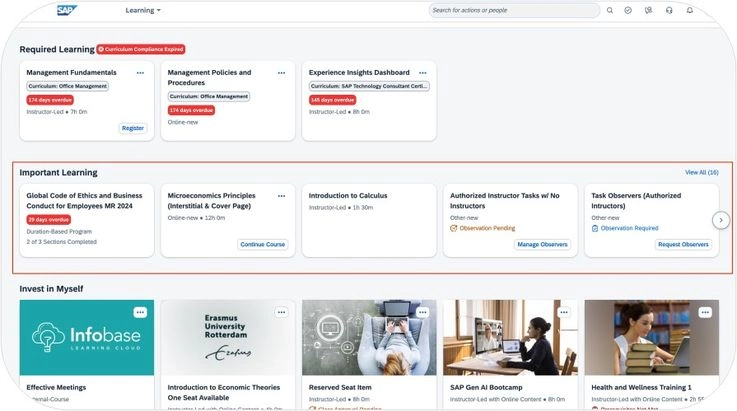
In a well-structured SuccessFactors Learning setup, you have:
- automatic training assignments,
- due dates, reminders, and overdue items,
- certifications,
- reports you can present during an audit without frantically “digging through emails.”
The result? Fewer situations where “someone forgot,” and the consequences end up hitting the business. It is the kind of order that leadership does not have to love, but starts appreciating very quickly.
3. Instead of “checked-off training,” you shorten time to productivity
Good employee onboarding is not about someone having “completed the training.” It is about them starting to perform the job independently.
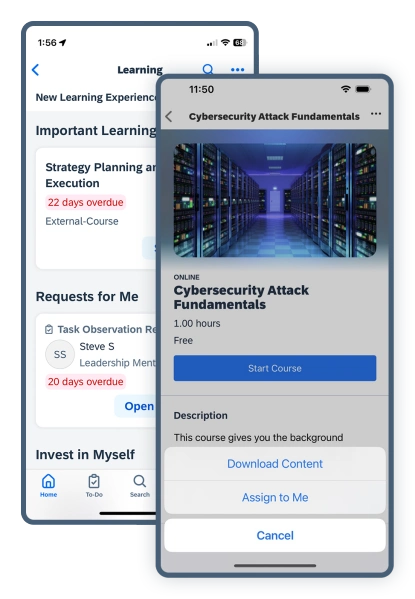
If Learning operates like a process, onboarding becomes manageable:
- you know what is mandatory,
- you know what comes next,
- you know where the delays are,
- you know where the process is breaking down.
At that point, the conversation stops being about headcount and starts being about how to shorten the time to full productivity. That is a language CFOs and COOs understand without translation.
If you want to go one level deeper and break onboarding into stages that can actually be managed operationally, read: “Onboarding 0–180: How to regain control over costs and delays after hiring.”
“How do you know?” - the data that separates a plan from wishful thinking
The most expensive kind of learning is the kind that looks good in a brochure but does nothing to improve operational readiness. That is why the title asks a second question: how do you know?
Reskilling without data can easily become an expensive act of faith. Companies cannot afford to operate on faith; they need to operate on data and outcomes.
A practical note: this only works if you have a single source of truth and consistent data across HR and operations. If data misalignment is a real risk in your organisation, see: “Zero Data Risk: How a ‘Single Source of Truth’ Protects You from Management Paralysis.”
When SAP SuccessFactors Learning is used well, it gives you hard answers to the questions that actually matter:
- Which critical roles have the biggest readiness gaps?
- In which locations is compliance starting to drift?
- Where does onboarding take the longest, and why?
- Which development pathways are genuinely reducing time to productivity, and which ones just look good on paper?
At that point, Learning stops being a soft cost and becomes a tool for managing risk and performance, and a process that can be actively run and measured.
When is reskilling not the best answer? Reskilling does not always win. If a role requires years of hands-on experience, a licence, or a long path of formal qualifications, hiring or external support may be the only realistic option. A second case is when you need to secure the role immediately and the time needed to build readiness internally is simply too long. In that situation, employee training should support external hiring rather than serve as the only solution. That allows you to meet immediate needs while also protecting the business for the future.
Without the business, Learning does not work - with the business, it works immediately
This is the hard truth: if HR alone owns readiness, then Learning will stay trapped in HR, while critical roles sit firmly within operations.
That is why SAP SuccessFactors Learning needs to be built into the normal people-management cycle:
- workforce planning,
- role readiness,
- succession,
- internal mobility.
When that happens, you get a simple, practical logic - a real competence bridge in action: the role, the requirements, and the pathway all lead to one outcome: confirmed readiness that can be monitored.

90 Days to build the bridge in SAP SuccessFactors Learning
If you are only just considering an LMS implementation - or you already have one and want it to finally start working operationally - do not start with the course catalogue. That is a trap. Start with critical roles and identify the points where a lack of readiness is creating the greatest business loss.
And if your bottleneck is still at the very front end - candidate screening, recruiter time, selection chaos — it is worth fixing the “front door” in parallel: “The cost of an empty desk: How much you lose on manual CV screening and how to stop it.”
Step 1: Define critical roles in business terms
Not “important roles,” but roles where a lack of readiness leads to downtime, complaints, health and safety risk, missed targets, or audit exposure.
Step 2: Define readiness in concrete terms
For each role, specify the training, licences, certifications, and the minimum requirements for the first 30, 60, and 90 days.
Step 3: Set 2-3 KPIs the leadership team will actually understand
Not 20 metrics. Just two or three:
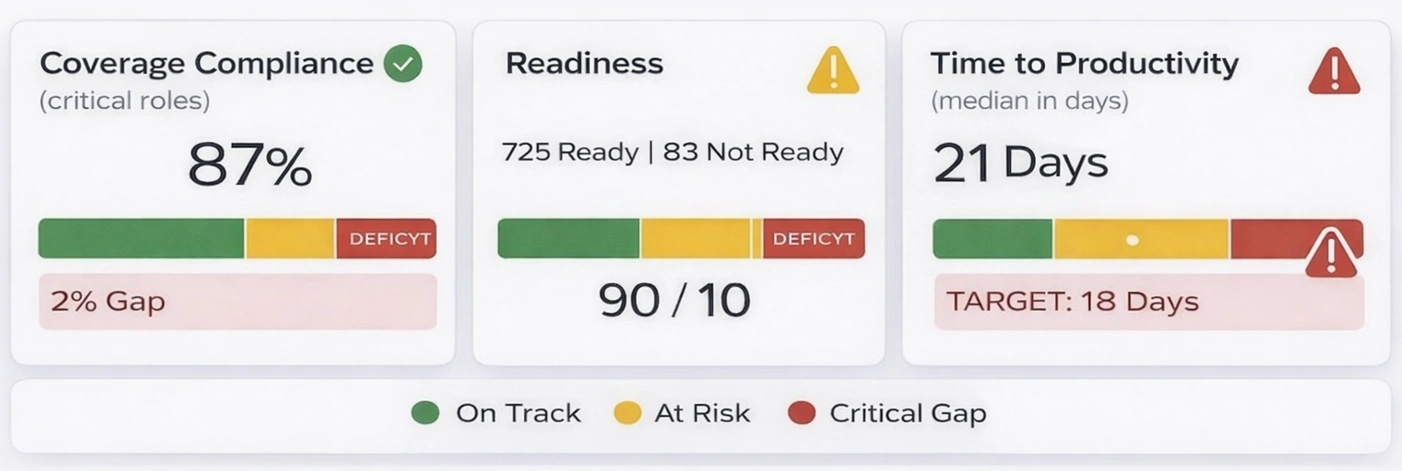
- compliance coverage in critical roles,
- readiness (who is ready against the role requirements),
- time to productivity.
Step 4: Build a 90-day “bridge”
Start with the foundations: compliance, onboarding, and one role family for reskilling. Then scale from there: more roles, more locations, better reporting.
Step 5: Set the rules of the game with the business
Who owns readiness on the line side? Who reviews it? Who acts when risk starts to rise? Without that, the LMS remains just an HR system. With it, it becomes an operations tool.
Summary: Hiring buys people, Learning builds readiness
If you are trying to protect critical roles through hiring alone, you are playing a game where the market sets the rules and you pay for uncertainty. Learning offers a different advantage: predictability, because it allows you to build a role-readiness process based on clear requirements, pathways, certifications, control, and hard data.
In organisations with distributed operations, hiring is rarely a true strategy for safeguarding critical roles. More often, it is simply a short-term way of filling gaps. The real advantage comes from systematically “producing readiness” - creating consistent standards and visibility into risk while there is still time to respond, rather than only once the business is already in firefighting mode.
And there is one key condition. If Learning is not embedded into the rhythm of operations and does not have a business-side owner, it will stay in HR as just another cost. If it is embedded properly, it starts working as a real safeguard for business performance.
How do you say this in the boardroom? We are not buying a training platform. We are building a manageable readiness process for critical roles: less compliance risk, shorter time to full productivity, and visible readiness status across every location. Instead of asking, “Do we have the people?”, we bring a better answer: “Who is ready, where the risk is rising, and what we are doing about it over the next 90 days.”
See where you really stand
If you want to approach this methodically, complete the Interactive HCM AI Readiness Assessment.
See how mature your HR function really is, where your biggest gaps are, and get a 6–12 month roadmap plus a PDF for the leadership team.

Ludwik Bogdański is a certified expert with more than 15 years of experience in running and implementing SAP systems integration projects, covering both client implementations and cloud projects, including SAP SuccessFactors and SAP Business Technology Platform (BTP). He specializes in the migration and transformation of SAP systems, providing the highest quality and knowledge necessary for the most complex and demanding projects. During his career, he conducted numerous trainings at SAP Training Centers in Poland and Europe, sharing practical knowledge and best practices. He currently works with the Ensis Technology team, supporting companies in the digital transformation of the HR area. Its key specializations are: • Implementation of SAP S/4HANA and SAP SuccessFactors • Project management according to SAP Activate and PRINCE2 methodologies • Integrations of SAP systems
Latest Articles
A good benefits process begins when employees don't have to ask HR what they are entitled to. They can see their own offer, know the deadlines, and understand what happens after they make a selection.
Recurring payroll adjustments are a sign that an organization is catching exceptions in data, decisions, or information flow too late. This article explores how to increase process predictability and reduce manual reconciliations before month-end closing.
Why is the question "who is available tomorrow?" largely a test of an organization's HR data quality, absence visibility, and decision-making agility? This article shows how SAP SuccessFactors helps organize employee data, absences, working time, and analytics so managers can react more quickly to changes in work schedules.